
When I start thinking about the design of a serviced accommodation or holiday-let property, I don’t start with cushions, paint colours or what’s currently fashionable.
I start with two much more important questions: where is the property, and who are we trying to attract?
For this design concept, I’m looking at how I would approach a two-bedroom country cottage in the Peak District, sleeping up to four guests. It is exactly the sort of property where it would be easy to create something beautiful — but for me, beautiful alone isn’t enough. The interior also needs to make sense for the property, appeal to the people most likely to book it, function properly during a stay and work commercially for the owner.
First, I look at the location
The Peak District immediately gives us a strong sense of place. People aren’t generally choosing a Peak District cottage because they want the same experience they might find in a city-centre apartment. They’re coming for the countryside, walking routes, villages, scenery, pubs, fresh air and the chance to get away for a few days.
That doesn’t mean the interior needs to become heavily themed. I wouldn’t fill the property with predictable countryside décor simply because it’s in a rural location. Instead, I’d take inspiration from the surroundings in a much more subtle way.
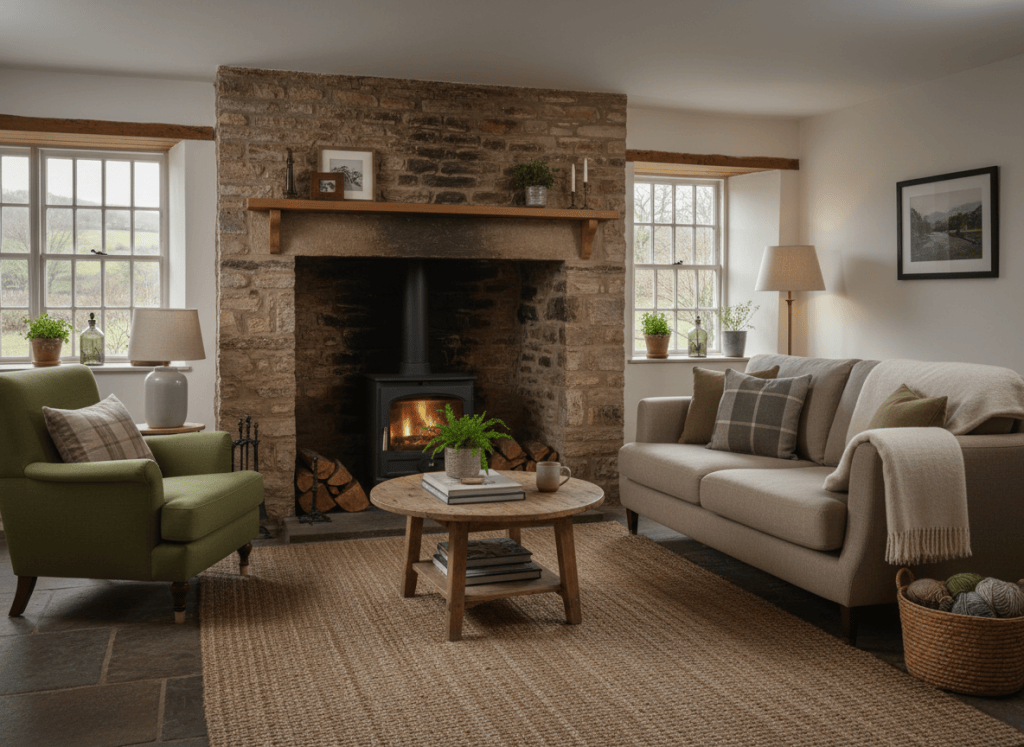
Natural stone, warm timber, olive and mossy greens, soft neutrals, tactile fabrics and warm lighting can all help the interior feel connected to its setting without becoming clichéd. I want the property to feel as though it belongs in the Peak District, while still being fresh, contemporary and attractive in photographs.
Who is actually going to stay here?
A two-bedroom cottage sleeping four gives us several potential guest types. It may attract two couples travelling together, a couple wanting more space, friends visiting for a walking weekend, or a small family.
That tells me straight away that the interior needs relatively broad appeal. I wouldn’t make it overly feminine, overly masculine or too dependent on one particular interiors trend. I’d want it to feel warm, grown-up, comfortable, relaxed and considered.
When I picture this property, I imagine guests coming back after a long walk, taking their boots off, putting the fire on and relaxing with a drink. Thinking about that experience helps me decide how the property should feel.
The design brief I would work to
Create a warm, characterful and comfortable countryside retreat for up to four guests, taking inspiration from the Peak District landscape while keeping the interior contemporary, practical and commercially appealing.
That one sentence becomes the test for everything that follows. Does a piece of furniture support that brief? Does the colour palette? Does the layout? If something looks nice but doesn’t help create the right property for the right guest, I’d question whether it needs to be there.
My design direction: modern country, not traditional country
For this cottage, I would describe the overall look as modern country. I wouldn’t want everything to be perfectly matched. Interiors can sometimes feel less welcoming when every item looks as though it has come from the same furniture collection.
- warm oak or aged timber
- oatmeal and stone-coloured upholstery
- olive and deeper green accents
- textured throws and cushions
- subtle checks
- ceramics and natural accessories
- woven materials
- soft ambient lighting
- simple landscape-inspired artwork
- restrained touches of black or aged brass
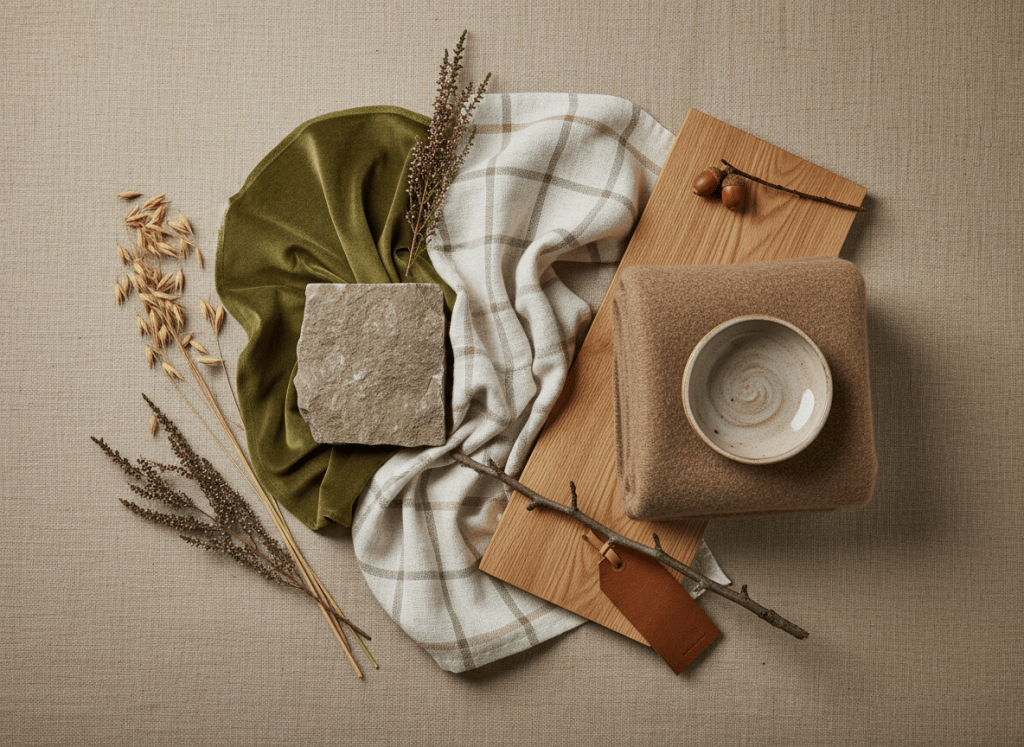
Taking the colour palette from the Peak District
I would work around warm stone, oatmeal, soft cream, olive green and earthy brown, with deeper accents used where the room needs more definition.
Green works particularly well for this type of property because it naturally links the interior with the countryside outside. But I wouldn’t necessarily paint every room green. Sometimes a smaller amount of a strong colour has much more impact — perhaps through an occasional chair, upholstered headboard, cushions, throws, cabinetry or carefully chosen artwork.
How I would approach the living room
The living room would probably be the area where I’d work hardest to establish the personality of the cottage. For a property sleeping four, the seating genuinely needs to work for four adults.
A beautiful two-seater sofa and one occasional chair may look lovely online, but it doesn’t work particularly well when four people arrive. I’d therefore be thinking about comfortable seating first, then side tables, lighting, rugs, storage and how the room works when guests are actually using it.
If the property had original stonework, beams or a fireplace, I would want those features to do some of the visual work. Rather than covering them up or competing with them, I’d use the furnishings to draw attention towards them.
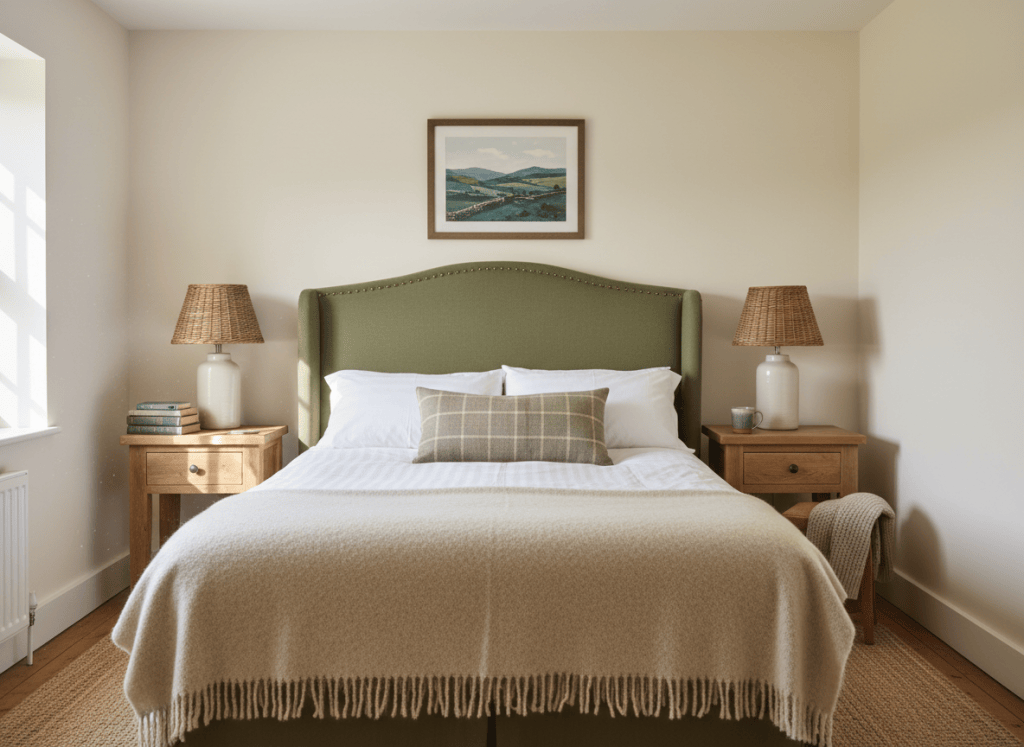
The bedrooms need to work for the booking market
The main bedroom is where I would introduce a little more luxury. A good bed, substantial headboard, quality mattress, attractive bedding, bedside lighting and layered fabrics can make a relatively simple room feel much more considered.
The second bedroom would need more thought. If we want to attract two couples, two strong double bedrooms could work extremely well. If families, walkers and groups of friends are important to the market, a twin or zip-and-link arrangement could broaden the audience.
That decision isn’t really an interior-design decision. It is a guest and commercial decision that then influences the interior design.
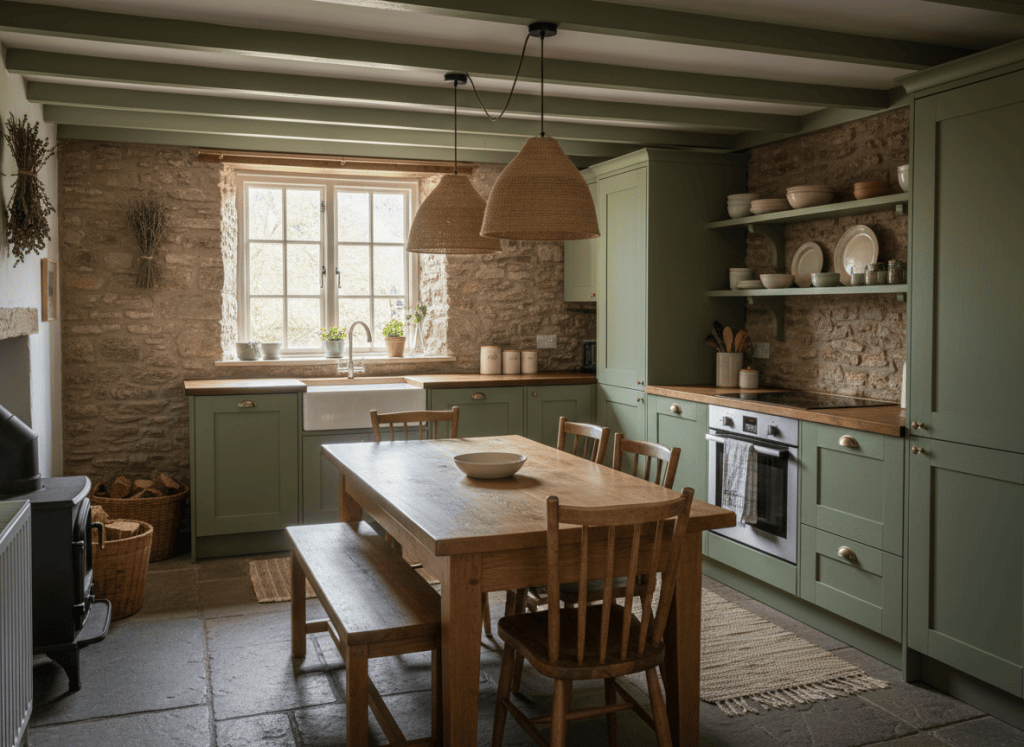
Creating a kitchen and dining space guests want to use
In a cottage designed for four people, I would want the dining area to feel like a genuine part of the stay rather than somewhere a table has simply been fitted because one was required.
A solid table, comfortable chairs and warm lighting can make the dining area one of the most attractive parts of a rural holiday property. It becomes somewhere for breakfast before a walk, dinner after a day out, games in the evening or sitting with a glass of wine.
Designing for photographs — but not only for photographs
Photography matters enormously in serviced accommodation and holiday lets. For most potential guests, the online listing is their first experience of the property.
So I think about how a room will appear in listing photographs: where the eye goes, whether there is enough contrast, whether the room has a focal point and whether the image feels warm and inviting.
But there has to be a balance. I don’t want to fill a property with accessories simply because they look good in a photograph if they make cleaning harder, clutter surfaces or reduce the practical use of a room.
The interiors I like most are the ones that do both: they catch your attention online and still work properly when you arrive.
Practicality has to be part of the design
- Durability: can the fabrics and furniture cope with repeated guest use?
- Cleaning: are surfaces unnecessarily difficult for housekeeping?
- Replacement: can an item be replaced realistically if damaged?
- Storage: have guests actually got somewhere to put their belongings?
- Lighting: is there sufficient practical lighting as well as atmosphere?
- Comfort: are the beds, sofa and dining chairs genuinely comfortable?
- Maintenance: does the styling create unnecessary work between stays?
Not every property needs the same level of furnishing
An average-sized three-bedroom house and a very large two-bedroom character cottage could require completely different furnishing budgets and levels of design input.
This Peak District cottage may justify a more considered approach because the property itself is part of what the guest is buying into. Character, setting and atmosphere can all contribute to the booking decision. That doesn’t mean spending heavily on everything — it means knowing where the budget will have the greatest impact.
The finished feeling I’m aiming for
When I picture the completed cottage, I don’t want guests to walk through the door and think, “Someone has tried very hard to interior design this.” I’d much rather they simply think:
This is lovely. This feels comfortable. This feels like the Peak District. I’d happily stay here.
The intended result is a warm, contemporary countryside retreat that can appeal to couples, friends and small families without becoming bland. Character without clutter. Comfort without compromising style. And enough individuality to make the property memorable without narrowing the potential guest market.
Why I start with the guest rather than the trend
It’s very easy to begin a furnishing project by asking, “What style do I like?” For serviced accommodation and investment property, I prefer to ask: “What will make the right guest choose this property?”
Then I look at the location, the property itself, the likely guest, the budget and the intended positioning — and only then do I begin to develop the look.
That’s the approach behind Gem Does Staging. I provide furnishing, staging and procurement solutions for serviced accommodation, holiday lets, investment properties, commercial properties and hospitality projects.
FAQ: Furnishing a Peak District holiday let
What interior style works well for a Peak District holiday cottage?
There isn’t one style every property should follow. I would normally take inspiration from the architecture, location and likely guests. Natural materials, warmer neutrals, greens and layered textures can work especially well in rural properties without making the interior feel overly themed.
Should a holiday let be designed differently from a normal home?
Yes. A holiday let needs to balance appearance with durability, maintenance, cleaning, guest comfort and photography. Furnishings also need to work for the maximum number of guests the property is advertised to accommodate.
Is good interior design important for serviced accommodation?
It can be particularly valuable in competitive markets because guests make initial decisions visually. The objective shouldn’t simply be to make a property fashionable. Good design should support the target market and make the accommodation comfortable, memorable and commercially appropriate.
Do all two or three-bedroom properties need the same furnishing budget?
No. Floor area, layout, property character, specification and target market can make a significant difference. A large two-bedroom property could require more furnishing and design input than a compact three-bedroom house.
Thinking about your own property?
If you’re furnishing a serviced accommodation property, holiday let, investment property or hospitality space, I can help you consider the property, location, target guest and appropriate furnishing level before deciding on the right approach.

