
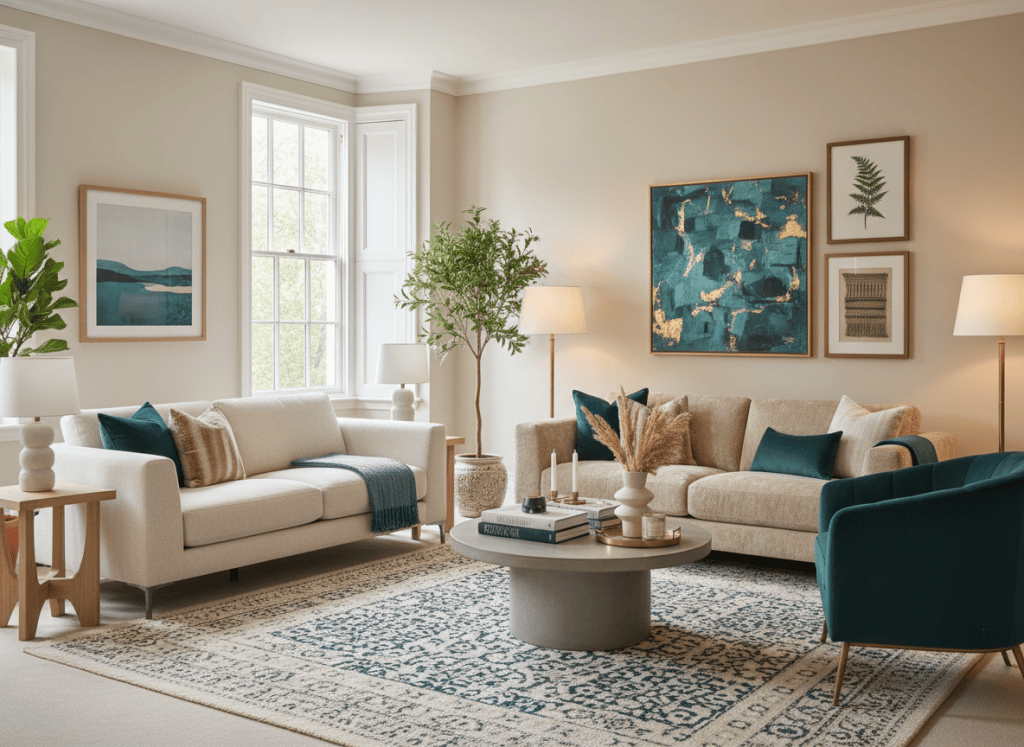
The right furnishing level for serviced accommodation is not automatically the most expensive one. It is the level that makes sense for the property, location, target guest and intended market position.
A practical three-bedroom investment property aimed at value-conscious family or contractor stays may not benefit from the same specification as a high-end corporate house, distinctive holiday property or premium relocation unit. The furnishing strategy should reflect that difference.
The first question should always be: who is the guest?
Before deciding whether a property needs Standard, Premium, Executive or Bespoke furnishing, you need to understand who is actually going to stay there. Guest expectations should shape the specification.
A contractor staying for several weeks may value excellent beds, strong Wi-Fi, practical storage, blackout window treatments, a proper dining area, laundry facilities and a durable kitchen set-up more than statement accessories. A corporate relocation guest may expect a more refined interior, a genuine workspace, higher-quality kitchenware, better lighting and a stronger overall finish. A family leisure guest may place more importance on seating capacity, dining space, child-friendly practicality, storage and a kitchen that works properly for full meals.
That is why the furnishing level should never be selected in isolation. It should respond to the guest profile, likely length of stay, reason for travel, expected nightly rate and local competition.
- Contractor / workforce stays: durability, sleep quality, laundry, practical storage, dining capacity and easy maintenance.
- Corporate / relocation: higher finish, workspace, premium sleep experience, stronger kitchen provision and a more polished environment for longer stays.
- Families: comfortable communal seating, practical dining, storage, laundry, robust finishes and a well-equipped kitchen.
- Leisure / weekend guests: visual appeal, comfort, location-led styling and photography that helps the property stand out.
- Premium / executive guests: stronger design, better materials, feature pieces, enhanced amenities and a more distinctive sense of quality.
The goal is not to provide the most expensive interior. It is to provide the right interior for the guest you want to attract.
Why use different specification levels?
Without a clear specification level, furnishing budgets can drift. One premium light fitting leads to a more expensive dining set, which then makes the original sofa look under-specified, and suddenly the project is thousands of pounds above its starting point.
A package ladder creates boundaries. It helps decide where the money should be spent and what level of design input is commercially appropriate.
Standard SA — practical, coordinated and investment-conscious
The Standard SA package is aimed at suitable local, investment-conscious properties — typically up to three bedrooms — where the priority is a complete, attractive and practical guest-ready set-up rather than a heavily bespoke interior.
The local launch package is £6,000, structured as:
- £4,000 furnishings, spent wholly on the agreed furnishing items with no Standard-level markup.
- £2,000 set-up for planning, sourcing, ordering coordination, assembly, installation and styling.
A Standard project can include
- Property review and furnishing brief.
- Furniture plan for agreed rooms.
- Supplier sourcing and item selection.
- Ordering and delivery coordination.
- Core furniture and agreed furnishings within budget.
- Assembly and furniture placement.
- Room set-up and styling.
- Accessories and agreed practical guest essentials.
- Final snagging and presentation check.
- Guest-ready handover.
Standard does not mean unfinished or generic. It means the specification is controlled carefully so the budget is focused on function, cohesion and presentation.
Premium SA — stronger design and guest appeal
Premium is appropriate where stronger design genuinely supports the market. The property might be in a location where guests expect a more developed interior, or it may need to stand out against better-presented competition.
Premium may introduce
- Enhanced furniture specification.
- A more developed colour and styling concept.
- Statement lighting.
- Better artwork and accessories.
- Higher-quality soft furnishings and dining pieces.
- More attention to photography-ready final presentation.
Premium projects are individually priced because the furnishing budget and design input need to match the property rather than fit a fixed package.
Executive SA — designed around a defined premium guest
Executive furnishing is useful when there is a clearly defined higher-value guest profile — for example corporate stays, relocation guests or a premium short-stay market.
Executive specification can include
- Premium beds, mattresses and bedroom finishes.
- Feature furniture and lighting.
- Enhanced guest amenities.
- Upgraded kitchenware.
- A more distinctive and coordinated overall interior.
- Specification choices designed around corporate, relocation or premium stays.
The important point is that the upgrade should be driven by the target guest and market position — not simply by a desire to spend more.
Bespoke SA — the property leads the design
Bespoke is for properties where a fixed furnishing formula is not appropriate. That may be because of the architecture, size, target market, brand requirements or the individuality of the project.
Bespoke can include
- Full design concept and mood boards.
- Detailed FF&E specification.
- Bespoke or made-to-order pieces where required.
- Expanded project management.
- Individually designed installation and styling.
- A furnishing approach built specifically around the property rather than adapted from a standard package.
How Premium, Executive and Bespoke projects are priced
Higher-specification projects are best priced in clear components rather than one arbitrary figure:
- 1. Furnishing budget — furniture, lighting, accessories, linen, kitchen equipment and guest items.
- 2. Design and procurement — concept development, specification, sourcing, ordering, coordination and project management.
- 3. Installation and styling — assembly, placement, finishing details, snagging and photography preparation where included.
- 4. Location and complexity — travel, access, additional labour, accommodation, storage and project-specific requirements.
When should you upgrade from Standard?
An upgrade can make commercial sense when one or more of the following are true:
- The property is larger than a typical Standard three-bedroom set-up.
- The intended nightly rate relies partly on a more premium guest experience.
- The local competition is strongly design-led.
- The property has distinctive architecture or features worth emphasising.
- The target guest expects a higher specification.
- The listing photography needs to communicate a premium position.
- The owner wants a stronger individual brand identity across one or several units.
When is Standard probably enough?
Standard may be the better commercial decision where the target guest prioritises practical accommodation, location and value over luxury presentation, and where a well-coordinated, durable interior can meet the market expectation without unnecessary upgrades.
Spending more does not automatically create better returns. The point is to spend in the areas the guest will notice and value.
Other factors that affect the quote
- Property size: extra bedrooms, living rooms, larger floor area or additional guest capacity.
- Access: difficult parking, stairs, no lift or restricted delivery windows.
- Travel: mileage, time, parking, tolls, accommodation and additional labour outside the local area.
- Operations: storage, waste removal, extra visits, damage replacement or additional coordination.
- Extra services: photography preparation, refresh work, replenishment and ongoing furnishing support.
A simple way to choose
Start with the guest, not the furniture. Decide who the property is for and where it sits in the market. Then decide what that guest expects from the space. From there, the appropriate specification becomes much clearer.
If you are unsure which level fits your property, send the listing, floorplan or photographs through with your intended guest and launch plan. We can then assess whether Standard, Premium, Executive or Bespoke is the most appropriate route.
View the package overview, explore design directions, or request a project-specific quote.

