
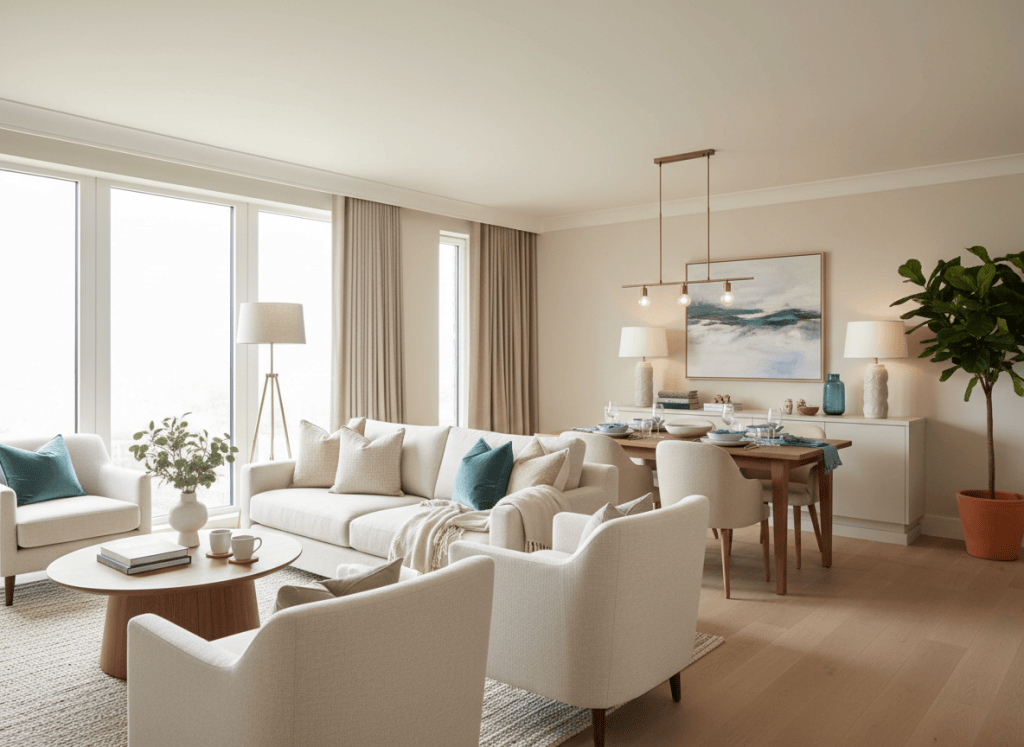
A serviced accommodation furnishing checklist should do more than remind you to buy a sofa and some beds. A successful set-up has to consider how guests arrive, sleep, eat, work, relax and use the property — and then make sure every room works as part of one complete guest experience.
This checklist is designed as a practical starting point. The exact specification should still be adapted to the property, guest capacity, target market and intended positioning.
Before you buy anything: establish the brief
- Confirm the number and purpose of every room.
- Decide the intended maximum guest capacity.
- Identify the likely guest profile.
- Measure rooms, walls, doorways and access routes.
- Check existing furniture and appliances and decide what is genuinely suitable to retain.
- Confirm the furnishing level: Standard, Premium, Executive or Bespoke.
- Check parking, stairs, lift access and delivery restrictions.
- Agree the furnishing budget, appliance provision, service fees, logistics and exclusions before ordering.
Entrance and arrival
- Practical doormat and entrance protection.
- Coat hooks, hanging or storage where appropriate.
- Mirror if useful to the space.
- Console, shelf or small surface where the layout allows.
- Good lighting.
- Simple styling that does not obstruct circulation.
Living room
- Enough comfortable seating for the intended guest group.
- Coffee table and/or side tables positioned for practical use.
- TV and TV unit or suitable wall-mounted solution where part of the offer.
- Floor or table lighting so the room is not dependent on one ceiling light.
- Curtains or blinds appropriate to the room.
- Rug where suitable for warmth, zoning and presentation.
- Artwork and mirrors sized properly for the walls.
- Cushions and throws that add comfort without creating excessive laundry or maintenance.
- Any practical storage required for games, books or guest items.
Dining space
The dining arrangement should normally reflect the number of guests the property is intended to accommodate. A six-person property with a four-seat dining arrangement can quickly become a usability issue.
- Dining table sized to the room and guest capacity.
- Appropriate number of dining chairs.
- Lighting over or around the dining area.
- Table protection or practical surfaces suited to repeated use.
- Simple styling for photography and arrival presentation.
Kitchen and essential white goods
A serviced accommodation kitchen needs to work as a complete guest facility. White goods are a core part of that operational set-up and should be confirmed at the briefing stage rather than left until the end.
- Fridge/freezer with sufficient capacity for the intended guest numbers and length of stay.
- Dishwasher where the kitchen layout allows — particularly important for larger-capacity properties and longer stays.
- Washing machine as an essential provision for many SA, corporate and relocation stays.
- Dryer / tumble dryer where required by the property, target guest and operating model; alternatively a suitable combined washer-dryer where space dictates.
- Oven and hob where not already fitted.
- Microwave where appropriate to the guest offer.
- Kettle and toaster.
- Crockery in quantities suitable for guest capacity, with sensible spares.
- Cutlery.
- Everyday drinking glasses, mugs and appropriate glassware.
- Saucepans, frying pans and ovenware.
- Knives, chopping boards and cooking utensils.
- Serving utensils, bowls and tableware.
- Can opener, bottle opener and other easily forgotten basics.
- Waste and recycling bins.
- Practical cleaning items agreed for handover.
Bedrooms: hotel-quality sleep is essential
The bed is one of the most important pieces of furniture in a serviced accommodation property. Guests may forgive a simple side table; they are far less likely to forgive a poor night’s sleep. Hotel-quality beds, mattresses, bedding and linen should therefore be treated as essential, not decorative upgrades.
- Hotel-quality bed bases or frames suitable for repeated guest use.
- Hotel-quality mattresses selected for comfort, durability and the intended guest market.
- Headboards where part of the scheme and appropriate to the room.
- Bedside table or usable bedside surface on each practical side.
- Bedside lighting.
- Wardrobe, rail, drawers or other clothes storage.
- Full-length or useful dressing mirror.
- Window coverings appropriate to privacy and sleep.
- Hotel-quality duvets, pillows, bedding and linen.
- Mattress protectors and pillow protectors for hygiene and asset protection.
- Enough linen sets for efficient guest changeovers, including agreed spare stock.
- Artwork and soft furnishings appropriate to the room.
- Workspace or dressing area where the market and room size support it.
Bathrooms
- Mirror and suitable lighting.
- Towel storage or hooks.
- Bath mat where appropriate.
- Waste bin.
- Toilet roll holder and practical accessories.
- Hotel-quality towels in quantities suitable for guest occupancy and changeovers.
- Storage or shelving where guests need it.
- Simple styling that can tolerate moisture and regular cleaning.
Laundry and housekeeping provision
Even where professional cleaners manage changeovers, the property itself should be operationally thought through.
- Washing machine and dryer provision confirmed and tested.
- Laundry basket or practical linen handling solution where appropriate.
- Iron and ironing board.
- Vacuum cleaner.
- Mop, bucket and basic cleaning equipment where agreed.
- Secure storage for spare linen and operational items where the layout allows.
Workspace and longer-stay considerations
- Desk or practical work surface.
- Comfortable chair.
- Task lighting.
- Accessible plug sockets.
- Good positioning for Wi-Fi use and video calls.
Lighting throughout the property
- Appropriate general lighting in every main room.
- Task lighting beside beds, desks and seating where useful.
- Warmer lamps to improve atmosphere in living and bedroom areas.
- Feature lighting on Premium and higher-specification projects where it adds value.
Accessories and styling
Styling should support the room rather than fill every surface. The aim is to make the property feel complete, coordinated and photograph-ready while remaining practical to clean and maintain.
- Artwork in the correct scale.
- Mirrors used purposefully.
- Cushions and throws.
- Plants or greenery where suitable.
- Decorative trays, books or objects used sparingly.
- Consistent colour direction across connected spaces.
Installation day checklist
- Coordinate supplier and delivery windows.
- Check furniture, white goods and all ordered items against the specification.
- Inspect for transit damage or missing parts.
- Position and test white goods where installation is within the agreed scope.
- Assemble and place furniture.
- Dress beds with the agreed hotel-quality bedding and linen.
- Dress rooms and install agreed accessories.
- Check circulation space and furniture positioning.
- Remove packaging where included in the agreed scope.
- Record any damaged, missing or replacement items.
Final snagging and presentation check
- Are all agreed white goods present and operational?
- Does every bed have the correct mattress, protectors, pillows, duvet and hotel-quality linen?
- Is there sufficient spare linen for the agreed changeover process?
- Can the intended number of guests sit, eat and relax comfortably?
- Does the kitchen have the agreed cooking, dining and storage equipment?
- Are rooms balanced and uncluttered?
- Are labels, packaging and assembly remnants removed?
- Are damaged or missing items logged?
- Does the property photograph consistently from room to room?
- Is anything obviously missing when you imagine a real multi-night stay?
A checklist still needs a specification
No generic list can tell you exactly what every SA should contain. A city-centre corporate apartment, a family holiday home and a contractor-focused three-bedroom house need different priorities. The key is that essential operational items — including beds, mattresses, linen and appropriate white goods — are never overlooked while the design is being developed.
Gem Does Staging starts with the property and intended guest, then builds the furnishing plan around the brief. You can explore the full service, compare package levels or send us your property details.

